


The CBAM mechanism in 2026 – what do steel and aluminium importers need to know?
An expert guide to CBAM – importers’ obligations, documentation and customs risks before the full phase-in in 2026.
“`
What is CBAM?
Why was it created?
How does it work?
From when?
What is CBAM (Carbon Border Adjustment Mechanism)?
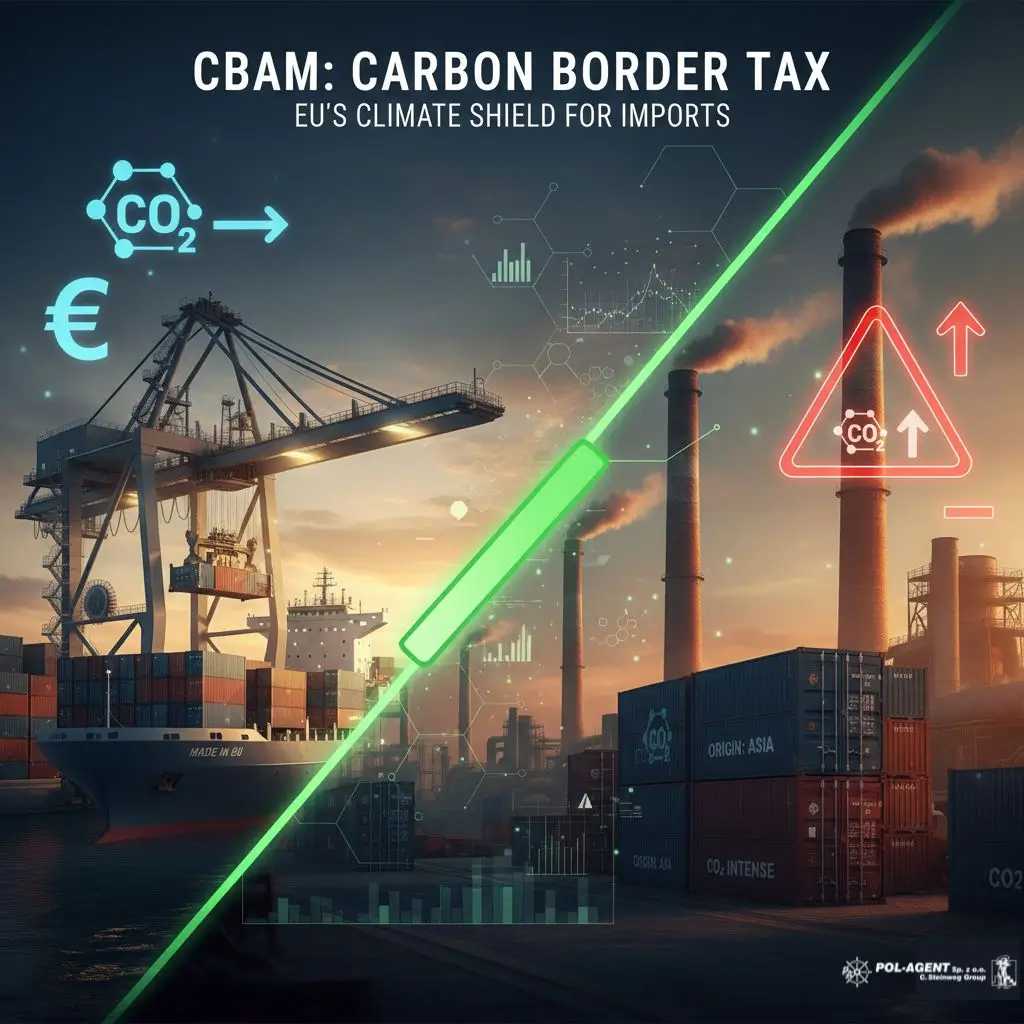
CBAM, or the EU’s carbon border adjustment mechanism (often colloquially referred to as a ‘carbon tax’), is one of the most important instruments of the European Union’s climate policy. It was introduced as part of the ‘Fit for 55’ package, which aims to reduce greenhouse gas emissions in the EU by at least 55% by 2030.
Why was CBAM created?
The main objective of the mechanism is to combat the phenomenon of carbon leakage. Until now, European manufacturers (e.g. steel producers) had to pay for CO2 emission allowances within the EU, which increased the cost of their products. Importers of goods from countries with less stringent environmental regulations (e.g. China, India or Turkey) were able to offer the same products at lower prices because their prices did not include climate costs.
How does CBAM work in customs practice?
• reporting quantities of goods and emissions
• no financial charges
• default values permitted
• authorized CBAM declarant status
• purchase and surrender of CBAM certificates
• reporting of actual data
Goods covered by CBAM
| Sector | CN codes | Examples of products |
|---|---|---|
| Iron and steel | 72 (selected), 7301–7311, 7318, 7326 | Rolled products, pipes, profiles, steel structures, tanks, as well as small items such as bolts, screws and steel rivets. |
| Aluminium | 7601, 7603–7614, 7616 | Unwrought aluminium, powders, dusts, rods, profiles, wires, sheets, strips, foils, tubes and aluminium structures |
| Fertilisers | 2808, 2814, 2834 21 00, 3102, 3105 | Nitric acid, ammonia, potassium nitrates, mineral or chemical nitrogen fertilisers, compound fertilisers. |
| Cement | 2523 10 00, 2523 21 00, 2523 29 00, 2523 30 00, 2523 90 00 | Cement clinker, Portland cement, aluminous cement, hydraulic cements. |
| Electricity | 2716 00 00 | Electricity imported from countries outside the EU. |
| Hydrogen | 2804 10 00 | Hydrogen (often used in industrial and chemical processes). |
| Chemicals (precursors) | Selected codes from sections 28 and 29 | Chemical products related to the production of fertilisers and polymers. |
Documentation from the supplier – what data does CBAM require?
From 2026, simply declaring the import of goods covered by CBAM will not suffice. As an importer, you must have detailed information originating directly from the production facility (installation) where the goods were manufactured.
What specific data must you request from your supplier?
🏭
Direct Emissions: The amount of CO₂ emitted directly during the production process (e.g., from fuel combustion at the factory).
⚡
Indirect Emissions: Emissions generated during the production of electricity consumed by the factory to manufacture the given goods.
📍
Installation data: Exact address of the facility and unique installation identifier (if registered in EC systems).
📈
Actual vs. default values: During the transitional phase, default values (averaged EC data) were permitted. From 2026, reporting actual values becomes essential.
Note: If the supplier does not provide actual data, the importer may be charged a higher fee based on unfavorable substitute indicators (financial penalties).
| Document / Data | Purpose of Use | Notes |
|---|---|---|
| Emission Report | Basis for calculating the number of CBAM certificates. | Should contain data on tons of CO₂ per ton of product (tCO2e/t). |
| Proof of carbon charge paid | Reduction of costs in the EU. | If the producer has already paid a carbon tax in their country, you may deduct this amount from the CBAM charge in Poland. |
| Verification by independent entity | Validation of data before the EC. | Emission data must be verified by an accredited verifier (mandatory in the full phase). |
Role of Customs Agency in the CBAM Process
The CBAM mechanism is not only a new tax, but above all a significant administrative challenge. Polagent Customs Agency takes on the burden of formalities, ensuring the smooth operation of your supply chain and full compliance with new EU regulations.
🛡️ Legal Security
We precisely verify the CN codes of your goods and check their status in the CBAM system, eliminating the risk of incorrect declarations and severe financial penalties.
📊 Reporting and Data
We support communication with suppliers outside the EU, helping to obtain reliable actual emissions data, which becomes mandatory from 2026.
Tip: As your customs partner, we can act as an indirect representative, which significantly simplifies the process of obtaining authorized declarant status in the CBAM registry.
Learn more about our full offer:
Comprehensive customs services for importers.
Prepare Your Company for CBAM 2026
Avoid import blockages and severe financial sanctions. Benefit from the expertise of Polagent customs specialists.