

Destination Finland: The modern Gdynia–Hanko ferry service
The maritime section of the E75 transport corridor
The ferry service between Gdynia and southern Finland is one of the key components of the Northern European logistics network, linking Central and Southern Europe with Scandinavia. This route serves as the maritime extension of the European E75 transport corridor, which runs from Greece through Central Europe to northern Finland.
The current transport model for this route relies mainly on Ro-Ro (Roll-on/Roll-off) services, which enable the rapid transport of road trailers, lorries and specialised cargo without the need to tranship goods.
Historically, Helsinki was the main destination port; however, with the development of intermodal logistics and the optimisation of transport times, the port of Hanko has taken over this role, offering more favourable operating conditions for freight transport.
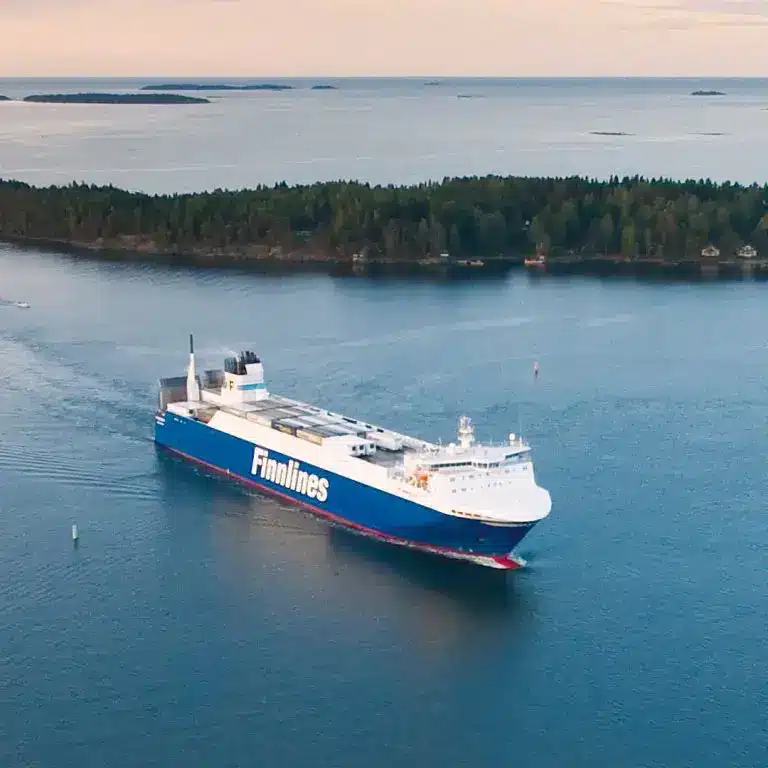
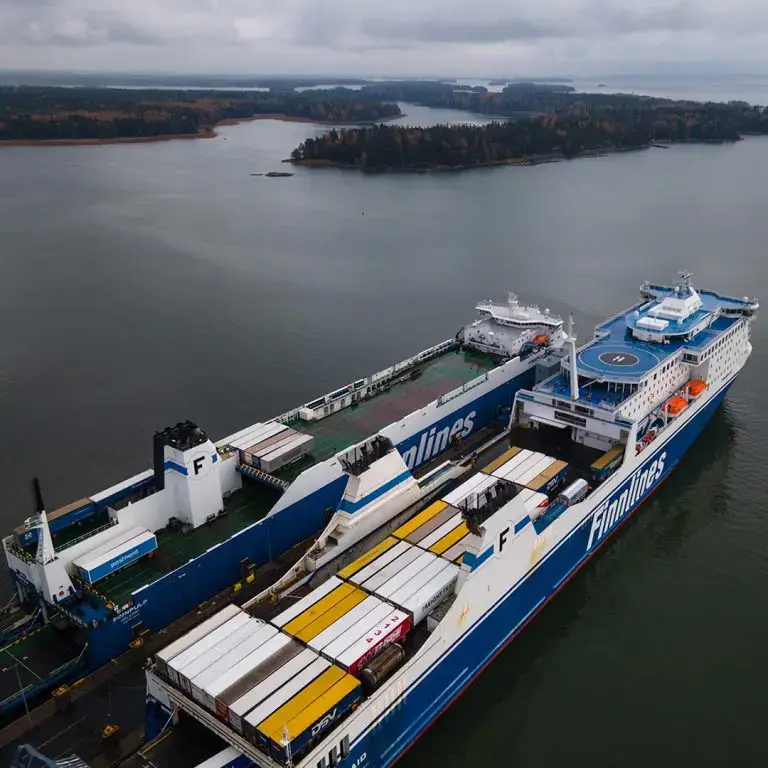
Pol-Agent offers unrivalled expertise in operating this route. As a company with deep roots in the maritime industry, we have been setting the standard for service on northern routes for decades:
- A long-standing partnership: For many years, Polagent has acted as the official representative and agent of the Finnish shipping company Finnlines in Poland.
- The historic Gdynia–Helsinki route: For many years, we have provided a full range of agency and freight forwarding services on this strategic route, which serves as the maritime extension of the European E75 road.
- The evolution of services: In response to changing market needs and the optimisation of logistics chains, the long-standing service to Helsinki has been replaced by a modern service on the Gdynia–Hanko route.
Connection Specifications and Fleet
Operator: Finnlines
Vessel type: high-capacity Ro-Ro vessels
Examples: the ‘Breeze’ class (Finnsea, Finnbreeze, Finntide, Finnwave) and, additionally, Finnmill and Finnpulp
Ice class: high ice class enabling winter operations
Frequency: usually 3–6 sailings per week
Average journey time: 19–22 hours
Technical data based on the Finnlines fleet specifications (Grimaldi Group).
The Logistical Importance and Characteristics of Ports
Finland – A maritime economy
Maritime transport is the lifeblood of the Finnish economy. As much as 95% of Finland’s imports and exports are transported by sea, which means that the Gdynia–Hanko route is not merely an alternative, but the cornerstone of the supply chain. Choosing this route guarantees operational security in a region that is almost entirely dependent on reliable ferry services.
Finnlines: Grimaldi Fleet
The line operator, Finnlines, part of the prestigious global Grimaldi GroupGrimaldi Group, operates one of Finland’s largest commercial fleets in terms of gross tonnage (GT) and cargo capacity. Its key strength lies in its modernity – investments in hybrid propulsion and emission reduction systems make it one of the most energy-efficient and environmentally friendly fleets in the Baltic Sea.
Port of Gdynia (Ro-Ro Terminal)
The Port of Gdynia is one of the most important logistics hubs in the southern Baltic Sea. The Ro-Ro terminal offers:
- direct link to the A1 motorway
- access to the Baltic–Adriatic TEN-T corridor
- a well-developed warehousing and customs infrastructure
- intermodal transport services
This enables the rapid delivery of goods from Poland, the Czech Republic, Slovakia, Austria and southern Germany.
Port of Hanko (Koverhar / Western Village)
Hanko is Finland’s southernmost port, which ensures:
- the shortest sea route between Poland and Finland
- shorter sailing time compared to Helsinkik
- high operational availability in winter
- efficient distribution to the Helsinki metropolitan area (approx. 130 km)
The port serves as a logistics hub for imports into Finland and for transit to Sweden and Norway.
Types of Cargo (Booking)
Thanks to the unique nature of Ro-Ro vessels, you can book a wide range of cargoes through Pol-Agent:
- Lorries and road trailers (Accompanied & Unaccompanied): Handling of articulated lorries with drivers and trailers only.
- Oversized cargo (Project Cargo): Construction machinery, steel structures, agricultural vehicles.
- Ładunki niebezpieczne (IMDG): Pełna obsługa dokumentacyjna towarów niebezpiecznych zgodnie z konwencją ADR/IMDG.
- Containers on chassis: Efficient intermodal transport.
Operational Information (Check-in)
To ensure logistics efficiency, please observe the standard check-in times:
- Vehicles with dangerous cargo (IMDG): Check-in typically closes 3 hours before the scheduled vessel departure.
- Standard trailers and combinations: Check-in typically closes 2 hours before departure.
- Documentation: All cargo data should be submitted in the Pol-Agent booking system in advance to avoid delays at the port gate.
Alternative Connections
In case of unavailability or specific time requirements, Pol-Agent offers consultancy on alternative routes:
- Route via Baltic States: Overland transit to Tallinn (Estonia) and ferry crossing to Helsinki (short voyage, high frequency).
- Route via Germany: Connections from Travemünde to Helsinki (longer voyage, higher social standard for drivers)
Why is it worth booking a ferry and buying a ticket with Pol-Agent?
Our history as a Finnlines agent is not just a thing of the past. It is a wealth of knowledge that enables us to offer the following today:
1. Priority in communication: Direct channels with port offices in Finland.
2. On-site customs clearance: Our in-house customs agency in Gdynia streamlines export and import processes.
3. Flexibility: Assistance in emergencies (booking changes, reporting delays).