

Agency services at the ports of Szczecin, Świnoujście and Police – specific features, challenges and procedures
The Szczecin–Świnoujście port complex is one of the key logistics hubs in the southern Baltic Sea. Although both ports operate under a single management body, their operational characteristics, navigational conditions and procedural requirements differ significantly. For shipowners and logistics operators, this means that agency services must be precisely coordinated; at POL-AGENT, we provide these services based on our many years of experience and excellent knowledge of local port conditions.
Translated with DeepL.com (free version)
Port characteristics – different operating environments
The port of Świnoujście serves as an outer harbour, directly accessible from the Baltic Sea. Its greatest advantage is the absence of restrictions associated with inland waterway navigation – ships enter directly from the sea, which allows for the handling of larger vessels and reduces operational time.
The port of Szczecin, on the other hand, is a river port (inland-sea port), situated approximately 60 km inland. This means that vessels must pass through the Świnoujście–Szczecin fairway, which imposes additional navigational and operational restrictions.
Nor should we overlook the role played by the Port of Police, which operates primarily as an industrial port, handling mainly the transport of raw materials and chemical products. Cooperation with Grupa Azoty Zakłady Chemiczne Police plays a key role here, as the company uses the port to import raw materials (such as phosphates and ammonia) and to export finished fertilisers and other chemical products.
Świnoujście
- direct access from the sea
- shorter operation time
- handling larger vessels
- greater flexibility from ETA
- better sailing conditions
– speed and accessibility
Szczecin
- 60 km waterway
- greater operational complexity
- draft restrictions
- the need to plan the transition
- regulated traffic
– requires planning
Police
- industrial port
- handling of raw materials and chemicals
- cooperation with Grupa Azoty
- imports (phosphates, ammonia)
- fertiliser exports
– dedicated operations
The Świnoujście–Szczecin waterway – a key component of the system
12,5 m
track depth
67.13 km
in length
up to 80,000 DWT
Panamax-class vessels
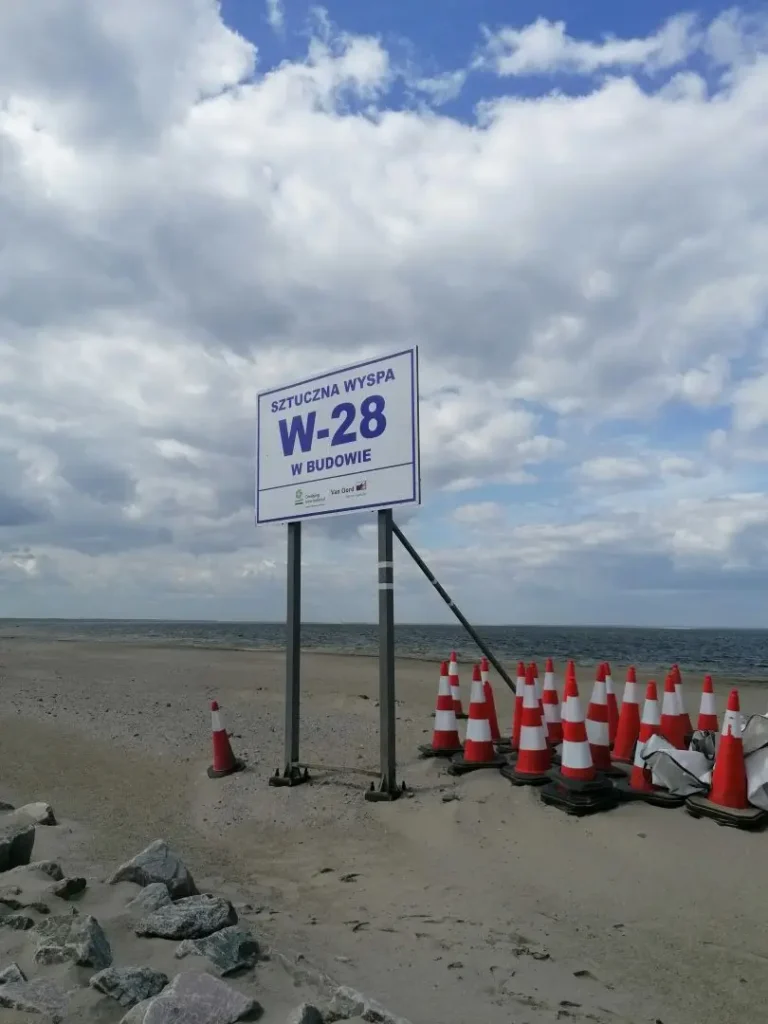
The most important factor determining ship handling in Szczecin and Police is the fairway linking the group of ports situated on the Oder. Between 2019 and 2022, it was dredged to a depth of 12.5 metres over a stretch of approximately 62 km, which has significantly improved access to the ports of Szczecin and Police for larger vessels.
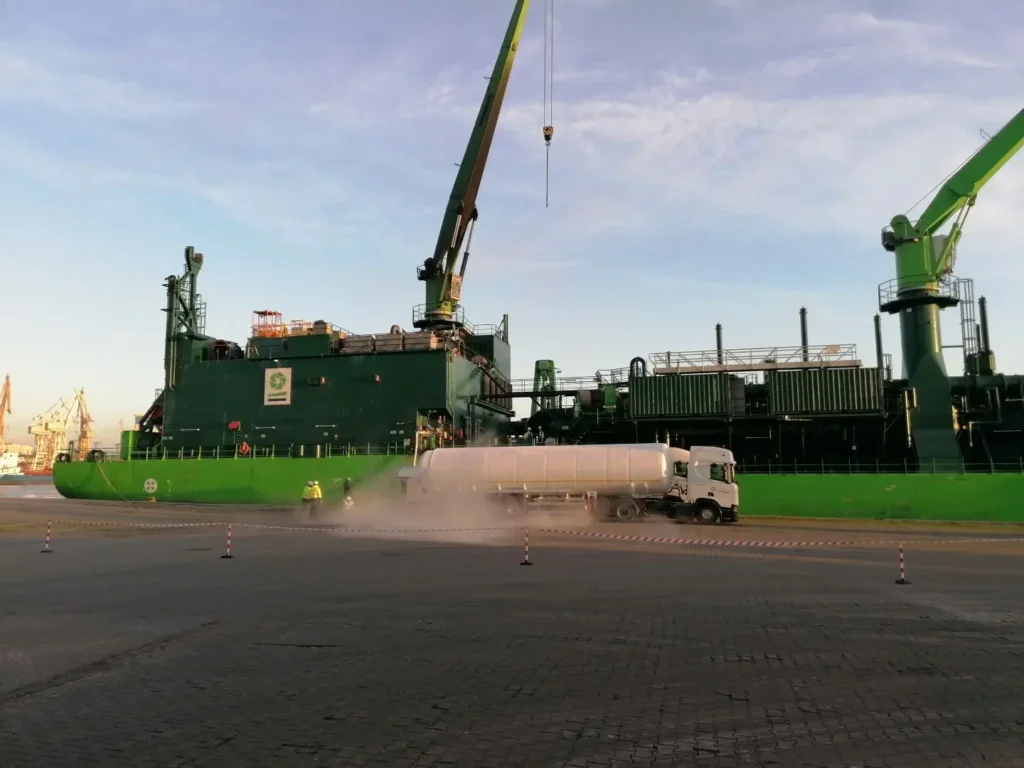
The project was carried out by a Belgian-Dutch consortium on behalf of the Maritime Authority.
The project was handled on the agency side by the POL-AGENT Szczecin office
Thanks to this investment:
- the maximum draught for vessels in Szczecin has increased to 11 m (fw),
- it is possible to handle PANAMAX-class vessels with a significantly higher deadweight tonnage (approximately 60,000–80,000 DWT),
- the need for lightening (the partial unloading of cargo to reduce the ship’s draught) in Świnoujście prior to entering Szczecin has been reduced.
Given the specific nature of our river ports, the agent must take the following into account:
🚢draft restrictions depending on current hydro-meteorological conditions
🌦️weather conditions on the Szczecin Lagoon (wind strength/water level)
⚓current navigational restrictions in force on the fairway and in ports
This entails close cooperation with the services responsible for coordinating vessel traffic in ports – harbour master’s offices, VTS, pilots and towage companies.
Transition time and operational planning
The vessel’s transit from Świnoujście to Szczecin usually lasts 4–5 hours, depending on:
- the size of the ship,
- weather conditions,
- traffic volume on the waterway.
- the ship’s destination
When authorising a vessel to enter the port, the agent, in consultation with the duty services, must take into account:
- loading/unloading point
- determine whether the transhipment terminal and the vessel are ready to carry out the aforementioned operation
- Please provide an approximate duration of the loading operation, including start and end times
This activity is referred to as ‘prospects‘ and is one of the most critical duties supervised and performed by the agent
It affects:
- traffic flow in the port
- ship-handling costs
- The schedule for all parties involved in cargo operations.
Notification of ships – procedural differences
The pre-arrival notification process is similar in both ports in terms of formalities, but differs in practice.
Świnoujście
- a shorter time frame for notifications,
- fewer operational variables,
- greater flexibility regarding changes to estimated arrival times.
Szczecin
- the need for earlier and more detailed notification,
- taking into account:
- traffic on the waterway,
- the availability of pilot boats and tugs,
- draft restrictions,
- the increased importance of ETA updates (Estimated Time of Arrival)
In practice, this means that agency operations in Szczecin are more complex and require constant monitoring of the operational situation.
Challenges in agency services
Navigation restrictions
Szczecin:
- limited draught,
- a narrow waterway,
- traffic controlled.
Świnoujście:
- greater manoeuvrability,
- better conditions for large vessels.
Coordination of multiple entities
In Szczecin, an agent must synchronise:
- pilotage (entry and fairway transit)
- tugboats in two ports,
- terminals,
- port authorities.
A key benefit for shipowners is access to our in-house customs agency, which reduces clearance times to a minimum
Time management
Any delay on the waterway has a direct impact on:
- time of arrival at the port,
- accessibility of the waterfront,
- the ship’s operating costs.
Summary
Operating as an agent within the Szczecin–Świnoujście port cluster requires flexibility and a thorough understanding of local conditions. Whilst Świnoujście offers fast and direct access from the sea, Szczecin – despite its greater handling capacity following the modernisation of the fairway – remains a more operationally demanding port.
A key factor in success here is the experience of an agent who is able to manage effectively:
- the notification process,
- planning the route through the waterway,
- coordination of all parties involved in port operations.
FAQ – Agency services at the ports of Szczecin and Świnoujście
Didn’t find an answer?
What are the main differences between the ports of Szczecin and Świnoujście?
The key difference lies in their location. Świnoujście is a port with direct access from the sea, whereas Szczecin is situated around 60 km inland and requires passage through the Świnoujście–Szczecin fairway.
In practice, this means:
- shorter turnaround time in Świnoujście,
- more complex operational planning for Szczecin.
How long does it take for a ship to travel from Świnoujście to Szczecin?
The standard duration is approximately 4–5 hours.
This may take longer depending on:
- weather conditions,
- traffic volume,
- the size of the vessel and its manoeuvring characteristics.
What is the maximum draught for ships in Szczecin?
Following the deepening of the fairway to 12.5 m, the maximum draught for vessels calling at Szczecin is approximately 11.0 m (depending on conditions).
However, an assessment is required in each case:
- the current water level,
- hydrometeorological conditions,
- administrative restrictions.
Can all ships enter Szczecin?
No. The restrictions are mainly due to:
- dives,
- the length and width of the ship,
- conditions on the waterway.
Larger vessels often opt for Świnoujście or require partial unloading (lightering), although this has become less common since the fairway was upgraded.
What is ship notification and when should it be carried out?
A notification is a report of a ship’s planned arrival at port.
In the case of:
- Świnoujście – the process is faster and more flexible,
- Szczecin – prior and more detailed notification is required, including a plan for navigating the fairway.
It is best practice to submit initial data as early as possible and to update it regularly (ETA updates).
Is pilotage mandatory for all vessels?
Yes — both in Świnoujście and along the fairway to Szczecin, a pilot is required for most commercial vessels.
In the case of Szczecin, the pilot accompanies the vessel along the entire length of the fairway, which requires advance booking and coordination.
What about tug assistance?
- Świnoujście – tugboats are mainly used for manoeuvring in the port.
- Szczecin – these are often required both on entry and exit, as well as during final manoeuvres, and their availability must be synchronised with the passage through the fairway.
What are the most common causes of delays?
The most common factors contributing to delays are:
- weather conditions (wind, fog),
- restrictions on traffic in the fairway,
- changes to ships’ ETA,
- availability of pilot boats and tugs,
- berth occupancy
Did the dredging of the Świnoujście - Szczecin fairway solve all operational constraints?
Not entirely. Dredging to a depth of 12.5 metres has significantly improved access to the port of Szczecin, however:
- operational restrictions remain in place,
- he current hydrological situation is of key importance,
- planning the transition still requires a great deal of precision.
Why is the role of a port agent so important?
The port agent is responsible for coordinating the entire ship’s call, including:
- notification,
- the organisation of pilotage and tugboats,
- contact with the terminal and port services,
- real-time ETA/ETD updates.
In the case of Szczecin, its role is particularly important given the need to coordinate numerous operational elements.
You can find a full overview of our responsibilities in the article: Vessel Handling and the Role of a Maritime Agent – A Complete Guide